
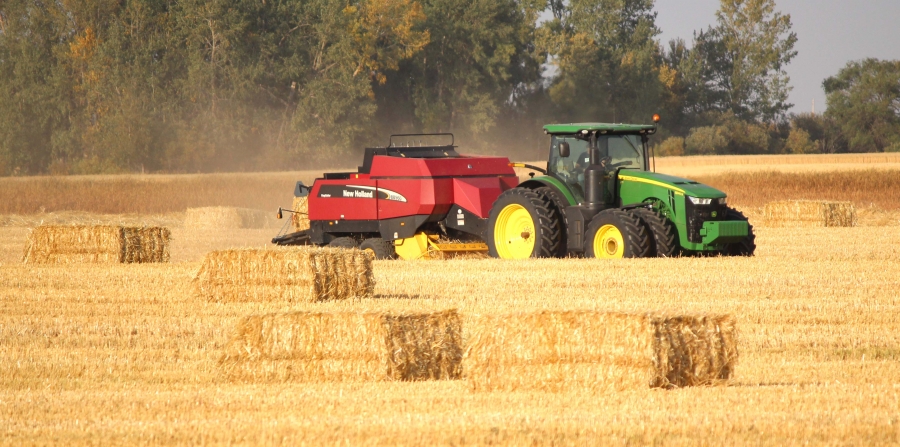
“It’s been a night and day difference from last year,” Ayre stated. “It was what a lot of people called the ‘harvest from hell’, that was the quote that was used. We are going to be finished our soybeans by the end of today (September 22). There is just no comparison.”
He said they were fortunate that they were able to get most of their crop off in 2019, so they did not have to do as much to get ready in the spring as some others. However, there was still a bit of work normally done in the fall that had to be taken care of.
“There was fieldwork we had to do, putting on the fertilizer, cultivation. We had to do that all in the spring.”
The conditions were wet to start out with for quite a few producers. During the summer, however, that moisture got used up. It was a fairly dry year, and Ayre said much of the crops were grown on the 2019 wetness.
Ayre said the cereals have come up well this year. Oats in particular have had a good season. He estimates in the area they were averaging around 140 bushels an acre. Although not often talked about, it seems oats were making somewhat of a comeback. Ayre said when they were selling seed in the spring, they sold all of their oat stock, and could not bring enough in. Some producers had to go to other provinces to get the seed. He said oats could be positive as they can yield high, and are good on mixed farms because they can be used for feed. They can be mixed with forage peas for livestock.
“From a cash perspective, you can sell them or use them for feed,” he explained.
Overall with the cereals, he said from what he was hearing, wheat was averaging 60 bushels an acre or higher, with a tremendous barley crop, due to the hot and dry conditions, of 75 or more bushels an acre.
Not everything was perfect, of course. The canola was looking very good, maybe 40 bushels an acre or so, but some areas ran into trouble with wind. Earlier this month, the 90-mile an hour winds did not do that crop much good. It depended on area and situation, but it could have taken 10 bushels an acre off the yield.
They also had trouble with one field of oats that was taken by cutworms. Ayre said they think it was due to not being able to harvest that field before winter and the worms planted their eggs in the swath.
There was also a touch of frost recently, which could have hurt some soybeans, as they are a later crop. Ayre said they planted an earlier variety, and what they have looks pretty good.
Harvest has not moved as quickly to the south, as the land was wetter there, so from the Croll road to the Turtle Mountains are a little behind those in the northern parts of the area.
Ayre said there was a bit of a price rally over the preceding weekend. In part due to storms in the US Midwest in August, it impacted most of the crops. Higher prices are always positive, although more fluctuation is likely, and some producers do not sell immediately at any rate.
Ayre said 2020 has been very interesting for sure. The coronavirus put a lot of things into perspective, he explained, saying he realizes more than ever we are lucky to live where we live and he is lucky to be able to do what he does, as it was more or less business as usual for agriculture. As well, it was just a more pleasant harvest.
“I will take harvest 2020 over 2019 for sure.”
by PAUL RAYNER, Recorder staff