
There are three main trails as a part of the system. Red Trail is 22 kms. long, while Blue is 10 kms and Purple is six kms. There are parts that are green and yellow on the map that connect different trails that are easier riding.
The trails are a part of the Souris River Bend Wildlife Management Area. Each of the three main trails takes riders on a unique part, all leaving from the aptly named middle camp. The Red Trail, known as Gregory’s Mill Trail, allows riders to choose the tougher cliff trail or the alternate green route. Also they can do a half cliff/half easier. There are red horse marking along the trail to keep you on the route, or you can choose different short cuts. It is similar with the Spring Hill Trail (purple) and Lang’s Crossing Trail (blue). All have great views and easier or more difficult riding options. Signage is up for the equestrian trails explaining the history of the area. There are also specific signs for each trail giving details of the ride and its name.
Margetts said the trails were set up about 30 years ago for endurance riders who wanted something challenging. In the 1990’s they received some grant money to further develop them. This was the only taxpayer money to go into the horse trails. Margetts said there has been some confusion on this, as the RM of Prairie Lakes asked her to help develop a hiking trail in the same area, that covers about a half-mile in length. There was some work done there, particularly with the flooded out road, which used some municipal money. But none was spent on the equestrian trails.
“There was no municipal money spent on the project. The horse trails never used municipal money. It all came from horse people.”
Margetts said there was some work had to be done on the trails this year to get them in shape, as they were a little overgrown. Keeping natural spaces in good condition can always be a challenge and takes work. She said they received some grants at times from the Manitoba Horse Council to help with the mowing. Also, there have been a number of donations from equestrian enthusiasts this year. They have received over $2,000 this summer.
“This shows how much people really love these trails,” Margetts stated.
The trails are basically for spring, summer and fall and 2020 was a successful year for them for sure. Margetts said the coronavirus might have played into this, with horse shows cancelled and the outdoors being a safe retreat.
“It was something you could do through COVID. There is lots of space for distancing. People were looking for places to ride horses. I was blown away by how successful it was.”
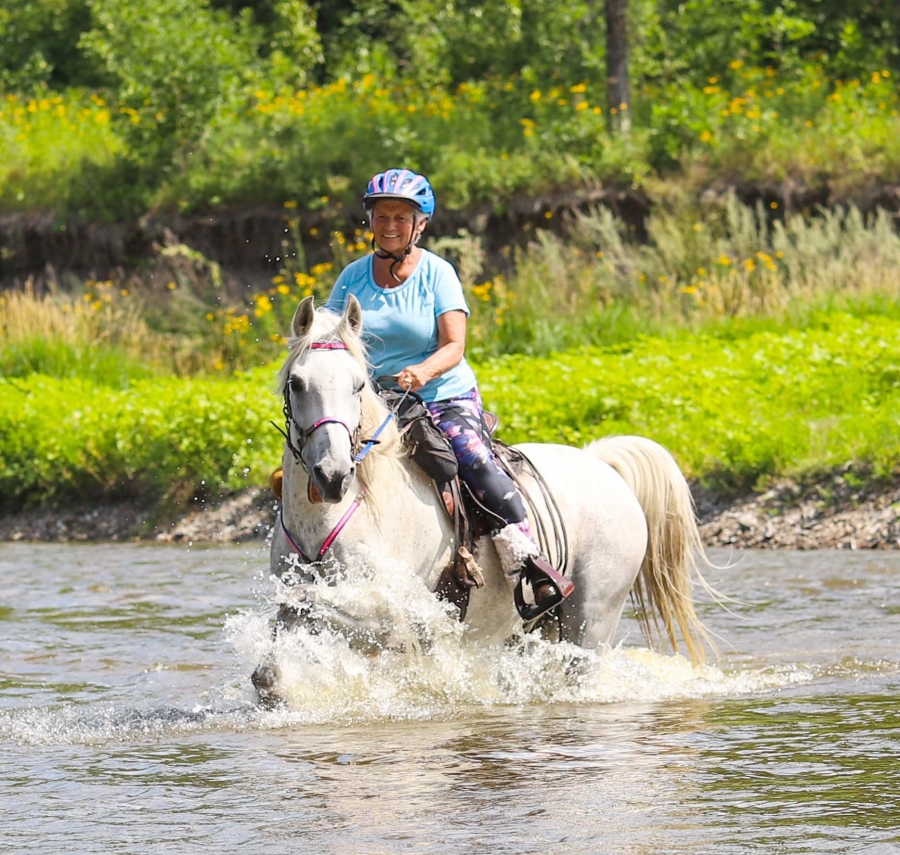
She has been doing trail rides on weekends and people from other areas have been coming out to enjoy the spot and the scenery. Margetts said it has been absolutely gorgeous this fall as the leaves change colour. When the weather is good, the camps can be used for overnights as long as riders are prepared to be “self-contained”. Both the north and middle camps are just a few miles off of the highway, so they are quite accessible.
The one concern Margetts has with the area is misuse. Quads have been running on the trails and can do some damage to them. They are not to be on the same paths as the horses, and she is concerned about losing them to the vehicles.
Right now, she has been printing up 2,500 maps to the area, which will be available at the site. Margetts hopes she can continue to convince horse people the trails are for everyone, not just endurance riders. She feels they are an important place for everyone.
“I am really passionate about the trails,” Margetts stated. “I think it is really important for people to be close to nature. I want to see it there for future generations, that’s what’s important to me. We need to have access to nature for riding.”
by PAUL RAYNER, Recorder staff