
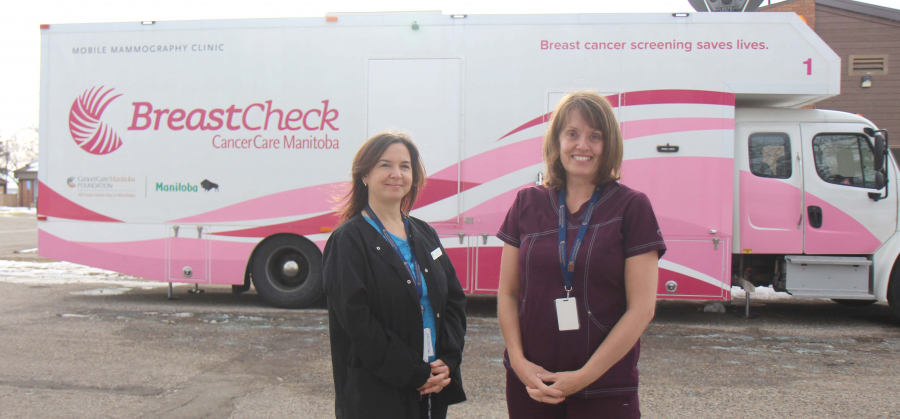
Breast cancer has long been one of the major health concerns, being the most common cancer in women, excluding non-melanoma skin cancers. According to the Canadian Cancer Society, it starts in the cells of the breast. Cells can change, and can lead to non-cancerous breast conditions. However, in some cases changes to breast cells can cause breast cancer. There are different types. Most often, breast cancer starts in the cells that line the ducts, which are the tubes that carry milk from the glands to the nipple (ductal carcinoma). It can also start in the cells of the lobules, called lobular carcinoma. Both these types can be in situ, staying where it has started, or invasive, which means it has moved to other tissues. There are also other less common types of breast cancer.
The tumours from breast cancer can also metastasize to other parts of the body.
Lu said in 2016 there were 873 new diagnosis of breast cancer in Manitoba, which was a 20% increase since 1996. However, she said it is important to note that since 1996, there has been a 29% decrease in the mortality rate for breast cancer. This is due to improved and earlier detection due to screening, specialist care, improved treatments and more awareness of risk factors and understanding how to reduce the risk of breast cancer.
Lu said they are not sure what causes breast cancer, but there are ways to reduce the risk. Some can be changed like food and exercise choices. The American Cancer Society recommends being physically active and limiting alcohol intake. However, the most common risk factors for breast cancer are age and being female. Most diagnoses occur with women over the age of 50, and only 10% of women diagnosed with breast cancer have a family history of the disease.
The best way to catch breast cancer early is through regular screening when there are no signs or symptoms. This way mammograms, which are x-rays of the breast that use low radiation, can find breast cancer two to three years before it can be felt by the woman or doctor. Lu added they recommend women be familiar with their breasts and what is normal for their breast tissue and see a healthcare provider if they notice changes that are not normal for them or last more than a few days. Some issues to look for include a puckering of the skin, a change in the nipple, new or bloody discharge, a change in the size, shape or colour, thickened hard skin or a new lump. Most lumps or changes are not cancer, however, checking is important.
Mammograms are key. Most women ages 50-74 should have a screening every two years. Trans women 50-69 who have been on gender-affirming hormones for a minimum of five years and are 50 or over should be screened and check with BreastCheck or the Diagnostic Imaging Centre for frequency. Trans men who are age 50-69 who have not had chest surgery should also have screenings every two years.
Women can make an appointment for a mammogram by calling 1-855-95-CHECK. Lu said they are presently working out their scheduling communities for the mobile clinic in 2022, and people can check for updates on www.cancercare.mb.ca/screening/breast.
On the day of the appointment, women should wear a two-piece outfit, and not wear talcum powder, deodorant or lotion on their breasts or armpits.
Lu stressed women must be “breast aware” by knowing what is normal for their breasts and check with a health care provider when something unusual occurs. Regular screening is key and the mobile clinics help rural Manitobans receive access to this important service. It is all about taking care of your health and doing it early.
“It is critical for women to get screening mammograms so that we have the best chance of finding cancer early when there may be more treatment options and better chance of cure.”
by PAUL RAYNER, Recorder staff