
“My wife was the first to come here,” Maningus said. “She decided to come here, and I respected her decision and decided to go with her. She felt the family should be a family and did not want us to be split. Working in the Middle East, I was not home. She applied to work in Canada, I came too.”
Tony Juanito, from Binga in the northern Philippines, has a degree in agriculture in his home country, and worked for a company that grew vegetables. One day, a recruiter came to his school and did a presentation on working abroad. He took a shot at it, ending up working for 15 months in Hawaii, before returning to the Philippines. There was an opportunity to apply to Canada, and because of his experience working abroad, he applied again.
“Luckily, I got in,” said Juanito, who has been in the country seven years. “I wanted to try doing agriculture here, to see the difference. This was the country that was open for us to apply.”
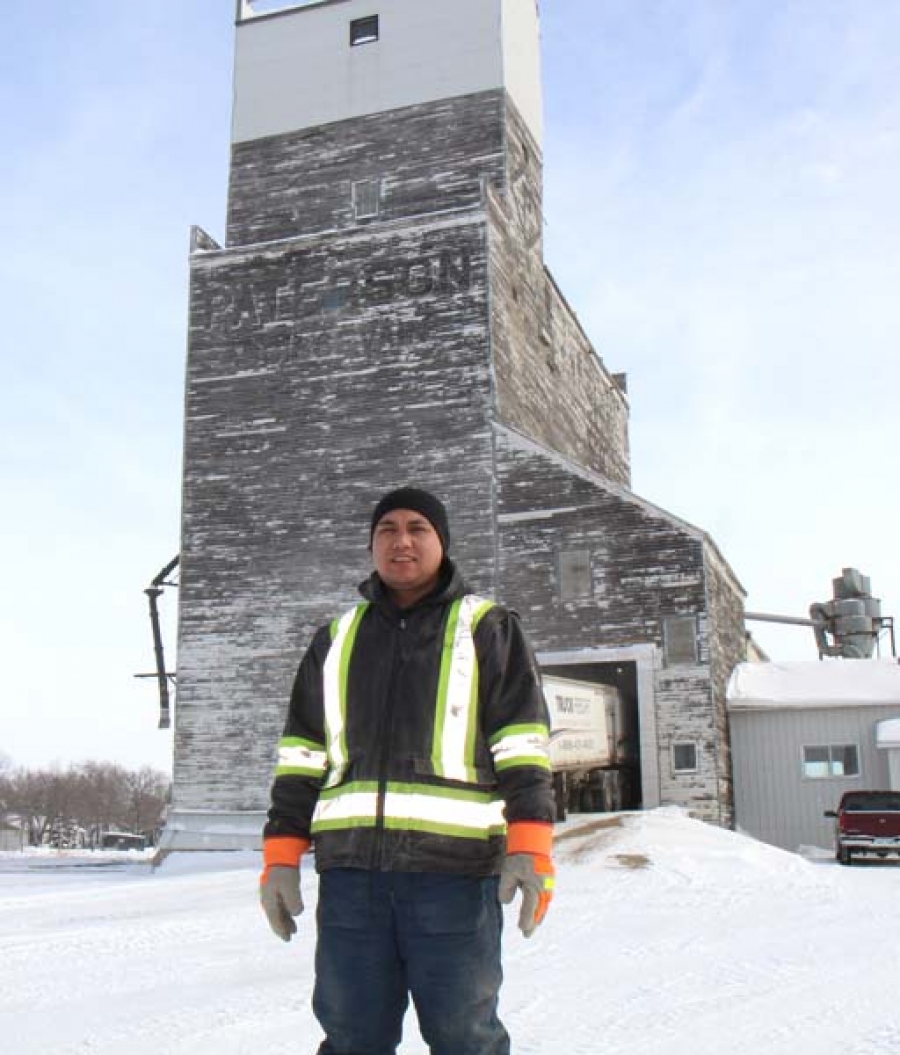
When he first came to Canada, he worked for a year in Roblin at a cattle and grain farm. That is where he got his permanent residency. There was not a lot of work there in the winter, so he moved on to Boissevain where he had friends at Whitewater Swine. He got a full-time job there and worked for three years. However, the smell of hogs is not for everyone, and Juanito looked for other opportunities. He applied at Paterson Grain in town, and has been there more than a year.
Maningus said his wife was originally supposed to work in Saskatchewan, but the company needed a worker here, so she was transferred to Boissevain. He started working with James Moore Construction building pole sheds, and then the next year he went for his permanent residency and moved on to the Whitewater barn.
“I don’t have any knowledge about farming, or agriculture,” he said, “but since I started working there, I started to learn about piggery.”
After a while, Maningus went looking for another job, and someone told him about the HyLife operations in Killarney, and he moved there. He has been working doing maintenance on their facilities for almost three years. In the meantime, Theresa also moved on from Whitewater, eventually getting her LPN and working at Westview Lodge and sometimes Killarney acute care.
There are many Filipinos working in the local ag industry. For example, Rexie Ralar works with Maningus in HyLife, and Felix Simon is still at Whitewater. In fact, almost every visitor from the Philippines has worked at that facility at one time or another. Juanito said a lot of Filipinos find work in this area, many with experience in agriculture. Maningus added companies in the ag industry go to the Philippines to recruit as well.
Juanito said he has noticed many differences between farming here and back home. Here, there are huge areas of land with only one owner. We use larger machinery, whereas in the Philippines they use more manual labour. As well, we have more extensive crop insurance here.
“They have it there,” Juanito said, “but it is very expensive. Farmers don’t really count on it.”
As well, in Canada, the government is more supportive of farmers. Of course, crops are different. In the Philippines they grow rice, fruits, flowers, vegetables and some corn. As Maningus said, the food is just for their consumption, not enough for export. At some times they are even short of rice. There is some livestock, but not to the degree of Canada.
At Paterson, Juanito is an elevator assistant. He loads, unloads, cleans and buys and sells grain.
“We keep the farmer happy,” he said with a laugh.
It can be a big change to come from tropical nation like the Philippines to a frigid landmass like Canada. They had to adapt to different weather and culture. However, both Maningus and Juanito said Filipinos are adjustable people. It is easier for them to adapt than many others. Because of their close relationship with the United States, English is their second language – they learn to read, write and speak it in school.
They and their families found Boissevain to be a welcoming place.
“Everybody is willing to help you,” Maningus said. “They will welcome you. They are smiling, too. If you encounter a person on the street, they say ‘hi, how are you today?’ They talk to you for a while.”
“Boissevain is not too bad as it is not too far from the city,” Juanito added. “To me, I’m not a city type of person. I don’t like traffic, a lot of people. I’m happy where I am here now.”
They do miss the old country, however. Maningus said there is no place like home. They have more family there, and here there is little to do in the winter. The lack of public transportation shows up, and sometimes it is difficult to not just be able to drop in on friends. They have their Canadian citizenship now and they are invested here. Maningus said he might get dual citizenship in the future, but they have reached a level of comfort here.
“I can’t talk about the future, everything changes,” Juanito stated. “But I would like to stay here.”
by PAUL RAYNER, Recorder staff