
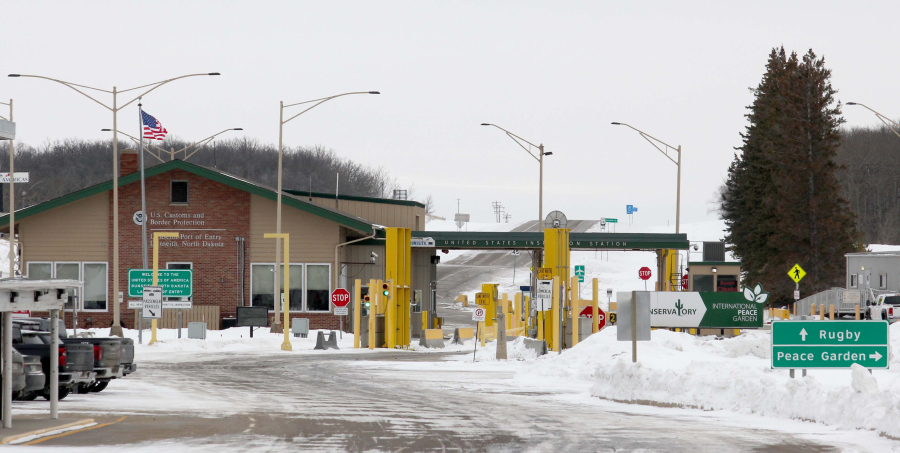
Another issue is the American president’s seemingly contradictory message. As Piwniuk stated, he campaigned on making life more affordable for Americans, however, tariffs on incoming products will do anything but.
The tariffs threatened were 25% on almost anything coming from Canada, 10% on oil. This is really a tax on American companies and consumers, as it would raise the price for those purchasing products or supplies. Trump himself has said the US can produce anything it gets from Canada and other countries, but that is not as easy as it seems. It takes time and money to ramp up production.
For Canada, the impact would be on our exports, which could be deadly as we have an export economy. In essence, our products would be 25% more expensive than US domestic competitors. As we depend so heavily on the US as a customer for our goods, we would not be able to quickly pivot to other markets.
Piwniuk said for our area, and much of Manitoba, the main impact would be agriculture. Livestock crossing the border would be the obvious place it would hit immediately. If the tariffs were applied, cattle would become uncompetitive with domestic US animals. This could be the same with all agricultural products moving south.
There are other industries in our area or close by that could be impacted, Piwniuk said. Western Archib in Boissevain or Westfield Industries in Rosenort both sell to the United States.
Trump has stated he has several objectives he wants to achieve from these threatened tariffs. Even before they were paused, Piwniuk felt his main goal was to rattle cages in order to effect desired changes.
“I think Trump is trying to get what he wants. He has a checklist and he is doing this to get what he wants.”
There are several issues. One is border security to handle the drug crisis. This is understandable as there is an opioid epidemic in both Canada and the US. A check in the numbers, however, shows the Mexico border is the far more porous one when it comes to deadly drugs like fentanyl. As well, as Piwniuk pointed out, there was a huge bust at the Boissevain port last year, and that was drugs coming north, not going south.
The administration has concerns regarding immigration as well. Again, most illegals move into the US through their southern border. Piwniuk is very pro-immigration, but understands the need to have better controls, with better vetting to know who is coming. There is a need to have a good fit for the country, with newcomers leaving old battles behind.
At the time of the pause, the Canadian government was planning serious retaliatory tariffs. Again, these would hurt both countries, as Canadians would see the prices rise the way Americans would on their tariffs. Piwniuk said it is important for the country to flex its muscles, however, at the same time, it would show how integrated our countries are economically. A vehicle, for example, regardless of whether it was built in Canada, the US or Mexico, would have parts from the other countries. Tariffs on one would impact the price for all. This is true for nearly everything we consume.
There are different ways to deal with what might still be coming. Canadians should buy as much from the country as they can, Piwniuk stated. There is a need to drop trade barriers between provinces to make this work better. Keeping good trade relations with Mexico is a key, as is developing other markets for our exports so our economy is not held completely for ransom by the whims of a US president.
Piwniuk said there is a role for provincial governments, to work with each other and create a united front. They can also work with state leaders. There was a recently meeting in New Orleans of different leaders, and the Mid West Conference will soon be held in Saskatchewan. This brings Midwestern states and provinces together, so issues can be discussed. The MLA added former North Dakota Governor Doug Burgum, who is now secretary of the interior, knows the situation and how it will impact his home state. This could be an important contact.
This remains a serious situation. As Piwniuk stated, a trade war could spark a recession. It is important to stand up for Canada but also be willing to negotiate on issues like border security.
“Our economies are so integrated,” he explained. “Markets don’t like instability. It is important to keep the lines of communication open and work toward a solution. Trump campaigned on low inflation, so if there is an increase of food costs in the States, he will see the impact.”
by PAUL RAYNER, Recorder staff