
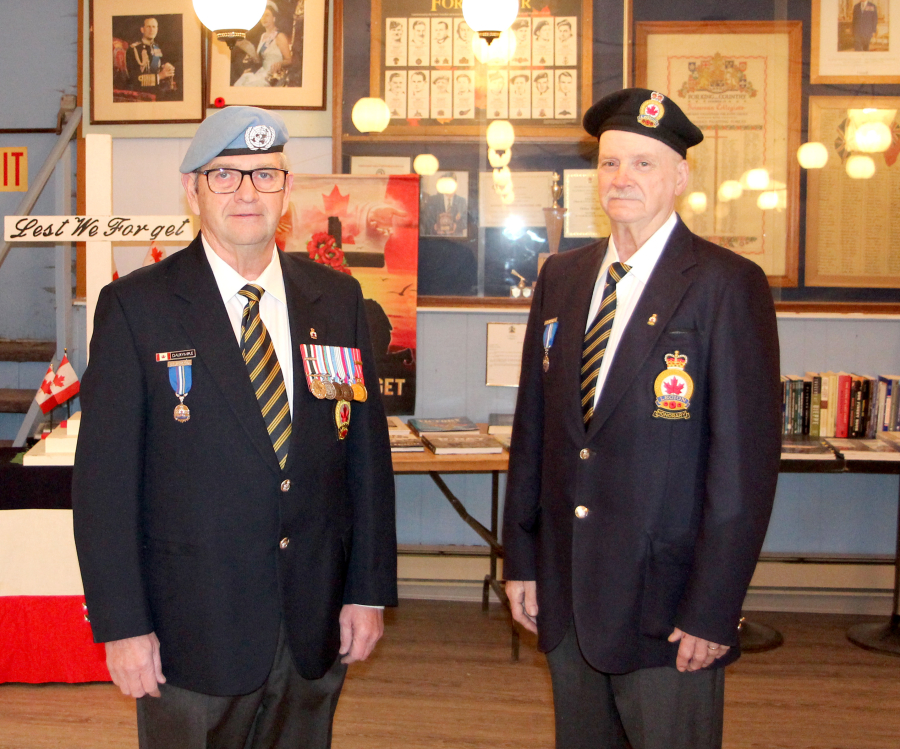
In Boissevain, the story began on March 13, 1919. According to Beckoning Hills Revisited, the local group formed under the Great War Veterans Association. What was known as the Boissevain and Ninga Branch began meetings that year, with overseas servicemen being full members and those who only served in Canada as associate members. One of the earliest concerns of the organization was “The Alien Question”, in particular a German shoemaker in town, as they were concerned about a former enemy perhaps taking employment from a veteran. As the history noted, there seemed to be more animosity toward the former foe after the First World War than after the Second, perhaps due to the proximity of trench warfare.
One of the first projects of the local GWVA was the construction of a memorial to the local fallen. The organization spearheaded this, with a full citizens’ committee created in 1920. The cenotaph was built and unveiled on South Railway Street in 1924. It was moved in 1947 to the hospital grounds, where it still proudly stands, with the names of World War Two dead added.
The local GWVA joined the Legion organization when it was formed in 1926, receiving its charter as Branch #10 of Manitoba Command that December.
The coming of the Second World War in 1939 spurred the Legion to greater action, as they helped the next generation of young men prepare for service. It played a role in establishing programs for them when they returned, as they themselves had little help when they came back. When the new veterans came home in 1945, they too became interested in Legion work, with “old sweats and new vets” working together. In 1981, there were 190 members.
Beard himself has been a member since 1974, joining at 18 years old. He and his brothers all joined through his father Bill who was a Second World War veteran. In those days, children of veterans could be associates. Beard said when he joined, they could not vote, but helped out at events. Eventually, children of veterans could become full members. Now, there is no need for any military connection, with Beard saying this change just came out last year, as a lot of Legions are struggling for members.
Another major impact the local Legion had that continues to this day was the construction of the hall. Originally, the Legion met in different spots in town, but they purchased the old Orange Lodge for $2,000 in 1946. By 1954, they began discussing a new home, and work progressed over a long period of time. The Orange Lodge was moved from the site and the new spot was open in 1968. It was later extended to the south, with many renovations over the years. The hall was later turned over to the municipalities, with the Legion keeping only the clubhouse in the basement.
The role of the Legion has changed over the years. At one time, the group held bonspiels and were involved in little league baseball. Beard said in his time, they held bingos, served the bars at socials, and were involved in the Remembrance Day poster program. Now he said their main focus is the poppy campaign and the annual Remembrance Day services. He added they still draw well for their November 11 services, which shows how the sacrifice is still remembered.
He said they would like to have more involvement, but need people and ideas. They do not have a goal for numbers, just to get a start.
“Maybe just get a start, then some other people follow in, then maybe we can get more involved in the community.”
He said anyone interested could contact him (204-534-6368) or Murray Dalrymple (204-305-0569) or come to a meeting. They meet every third Thursday of the month in the clubroom except in the summer.
Many had thought the Legion would go when the last veterans passed. Beard said that is why the organization brought in sons and daughters, and later grandchildren. They would definitely like to keep an organization alive, particularly for new generations of veterans.
“We’re trying to see if someone is interested in joining, to honour the old veterans and the younger veterans who are in there now.”
by PAUL RAYNER, Recorder staff