
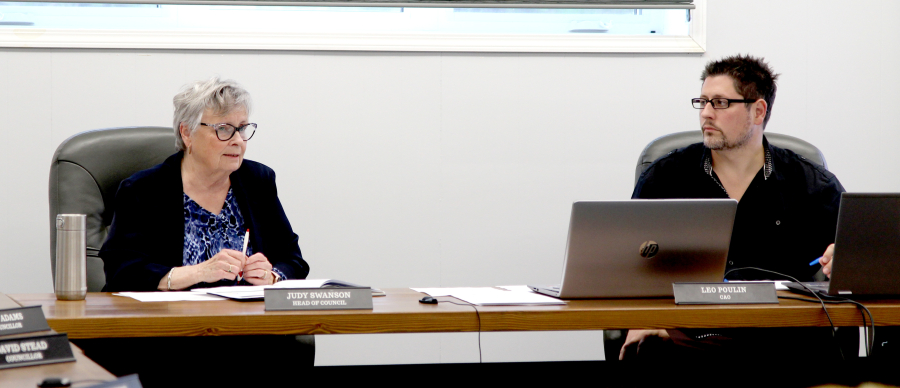
Swanson stated at the beginning their consistent stand on the issue.
“This council has fought against the use of a single mill rate right from the beginning,” Swanson explained. “Our municipality like others that have a considerably higher assessment in rural compared to urban has fought to keep two mill rates so it makes sense. With that knowledge, we lobbied two provincial governments to allow municipalities to keep two mill rates, rather than be forced to adopt a single one.”
At this time, the urban mill rate is 20.263 and the rural is 13.275.
She explained they had met ministers, who could not give a good reason for the move and were not able to provide anything more than extensions. Boissevain-Morton has responded by creating special service levies, which would in part alleviate the problem.
Swanson said the first thing they did when they began their consideration was to remove all farmland from special service levies. This means it will not be part of any of the changes. They also decided to do it a year earlier than necessary to avoid a re-assessment year.
“We did spend a lot of time on this, since 2015.”
Poulin had the task of explaining the nuts and bolts of the changes. There are three main parts of the by-law. The first is to broaden the 2023 urban special services levy by-law to include police, fire and EMO to all residential and commercialproperties in both wards of the municipality. The second is to update the garbage collection levy for the urban ward and repealing the previous waste and disposal by-law. The third is to create a new service levy for urban residents for street construction and maintenance, streetlights, animal control, tree management and beautification. As well as keeping costs in the ward they are used, changes would keep from a major tax shift to higher assessed properties.
Council and administration spent many hours reviewing different options, including special service levies, per parcel options, and urban/rural splits. A complication is that there are only so many services in which special service levies can be applied, and the province was not interested in expanding it.
The first component was protective services, which by-law ended in 2023. The proposal is to remove street lighting and animal control. The by-law would extend across the entire municipality, instead of just in the urban. This would mean rural residents would be paying for RCMP protection, which they have not prior. Again, this would only extend to residential and commercial properties in the rural ward, with farm property, making up 72% of taxable properties, exempt. As well, the per parcel rate, paid by anyone regardless of worth of property, is going up to 50% over the previous 42%. In 2024, the total cost of this area would by $509,703 and is projected to rise to $638,134 by 2030.
The waste collection levy would again be all urban, and be 100% per parcel.
The third for urban services, which would be based on 100% based on assessment. It would include street lighting, animal control and other services. Not all of the costs in the urban can be assessed this way, as there are costs that cannot have special service levies. The projected amount of this levy in 2024 is almost $205,000.
This year and future, the urban special services levies on the tax bill will be only one line. On the rural residential, there will be one added, the protection services.
In an impact slide, Poulin gave examples of changes. On farm property worth $300,000, their municipal taxes would drop $31.51, while changes to the school tax rebate system, would see an overall decrease of $447.06. Where rural would see an increase in commercial and residential in certain areas. As he explained, in municipal residential taxes, urban is paying nearly double to rural, which council did not see as fair. Although more services are in the urban, they can be accessed by rural residents. This means an urban property of $100,000 would see municipal taxes drop $46.81, while rural would go up $267.
Both Swanson and Poulin mentioned that many municipalities are not or have not gone through this process, but instead are using a single mill rate for everyone.
“We know a lot of municipalities in our area, around us, over the last seven years, crept up and did this straight across the board. I think we’re one of the first municipalizes to have a public meeting on this. We think it’s important that you guys know what’s going on,” Swanson said.
In discussions, members of the public mentioned the poor representation of the RCMP in the rural area, which Swanson said they would be discussing with them now they are paying. Others brought up the fact rural properties had to drill wells for water, so they were not pleased with paying into water and sewer costs.
At the end of the meeting, council passed first reading of the by-law. It now goes on to the Municipal Board for approval before coming back to council. Swanson said they expect the province will pass the proposal with few tweaks.
As well, the municipality received permission to push back the date of their budget in order to get this done first.
by PAUL RAYNER, Recorder staff