
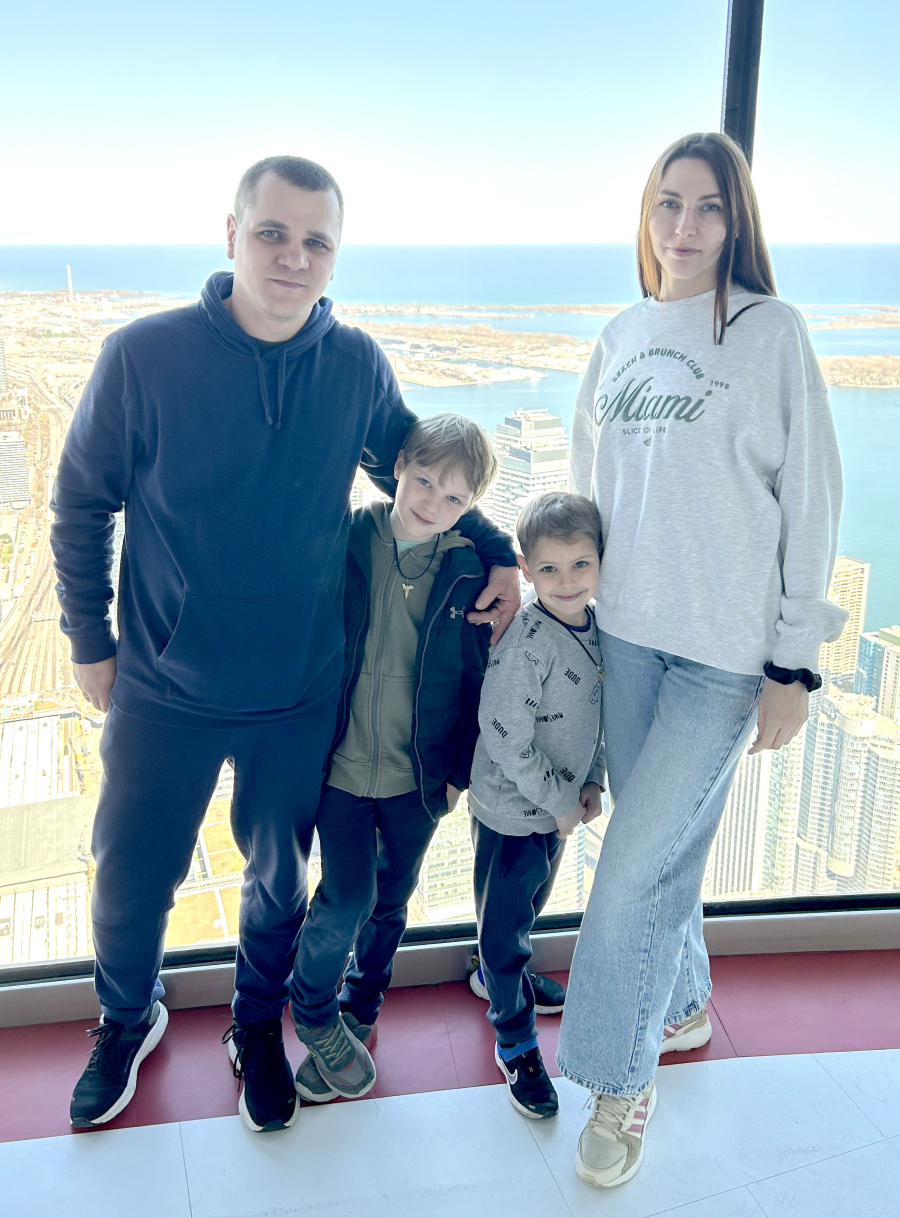
For Sasha Peredystyi and his family (wife Inna and sons Misha and Dima), who moved from Ukraine two and a half years ago, it is all about food, family, and fun. Traditionally in Ukraine, Christmas Eve, as we know it, is celebrated on January 6 as “Holy Evening”. Some attend church services and fast for most of the day while they prepare for “Holy Supper”, a feast of at least 12 different vegetarian dishes. The menu varies by region and family, but the one must-have is kutya, a sweet dish made from wheat berries, poppy seeds, and honey that sits overnight. Kutya is always served first, but everyone is expected to try a little bit of each dish. A bird is roasted too, usually duck or goose, since there are no turkeys in Ukraine. The day often involves a lot of cooking, but thankfully lots of family is around to help. In some areas, folks leave a small plate of food out overnight, with clean utensils and a glass of wine, for their ancestors and loved ones who have passed.
Sometimes, neighbours will leave their porch light on, welcoming local kids to come carolling or perform a skit, usually in exchange for candy, but Sasha says this practice was more popular when he was a kid.
The holiday season in Ukraine ends on January 19, known as Feast of Epiphany, or Baptism of the Lord. On this day, many Ukrainians go for a plunge in a cold lake! By bathing in the icy waters, usually blessed by an Orthodox priest, it symbolizes the baptism of Christ in the river Jordan, as well as healing and cleansing of the soul for the year ahead. It is also said to have positive effects on health and the immune system.
Much like the rest of us on Christmas Eve, Sasha and his family end up relaxing together on the sofa watching movies. He says Home Alone and the Harry Potter series are the favourites in their household.
Celebrating Christmas in January while most of Canada celebrates in December does not mean the kids miss out on anything, though.
“In Canada, we celebrate both,” Sasha says. “Some of our Canadian friends invited us, so we celebrate with them.”
Awet Ghile and her children Gizena, Natan, and Noh also celebrate Christmas twice. After leaving Eritrea in search of a safer and better life, the single mother and her children lived in a refugee camp in Sudan before being sponsored by Boissevain Resettlement Committee (BRC) three years ago. The family was able to join Awet’s cousin here.
“Celebrating two Christmas’ in different and new ways makes the winter season beautiful,” she says.
Eritrea is a country in Africa near the Red Sea, so while the weather may be drastically different in January, the spirit of Christmas is the same. She says that both here and back home the winter holidays are the most important, but now they also help to brighten up the cold Canadian winter.
“In Eritrea, Orthodox Christmas is feast time,” Awet says. “We eat fresh meat if possible, usually beef, lamb, or goat, and make a special meal called zigni, which is a spicy meat stew.”
She also described a chicken dish with spicy sauce and boiled eggs, fluffy bread made with fermented dough of local grains, and himbasha, a flatbread used to mop up the delicious sauces. With a growing Eritrean population and relatives nearby, the family gets to enjoy a blend of Christmas traditions.
As rural Canadians, we can sometimes take for granted what we have here. We may have gripes and complaints, but we are lucky to not fear violence at the hands of our government, or bombs falling from the sky. Organizations like BRC do a lot to help newcomers get settled and feel welcome in their new communities by helping them with everything from visa paperwork and housing to English classes, finding work, and so much more.
“The BRC were and are very supportive to us, and Boissevain is the most caring community we have ever seen,” says Awet. “We fell in love with this community.”
It can be uncomfortable to watch the world change before our eyes, but we should be proud and pleased that we can offer a safe home for families in need.
by JACQUIE MAYNARD