
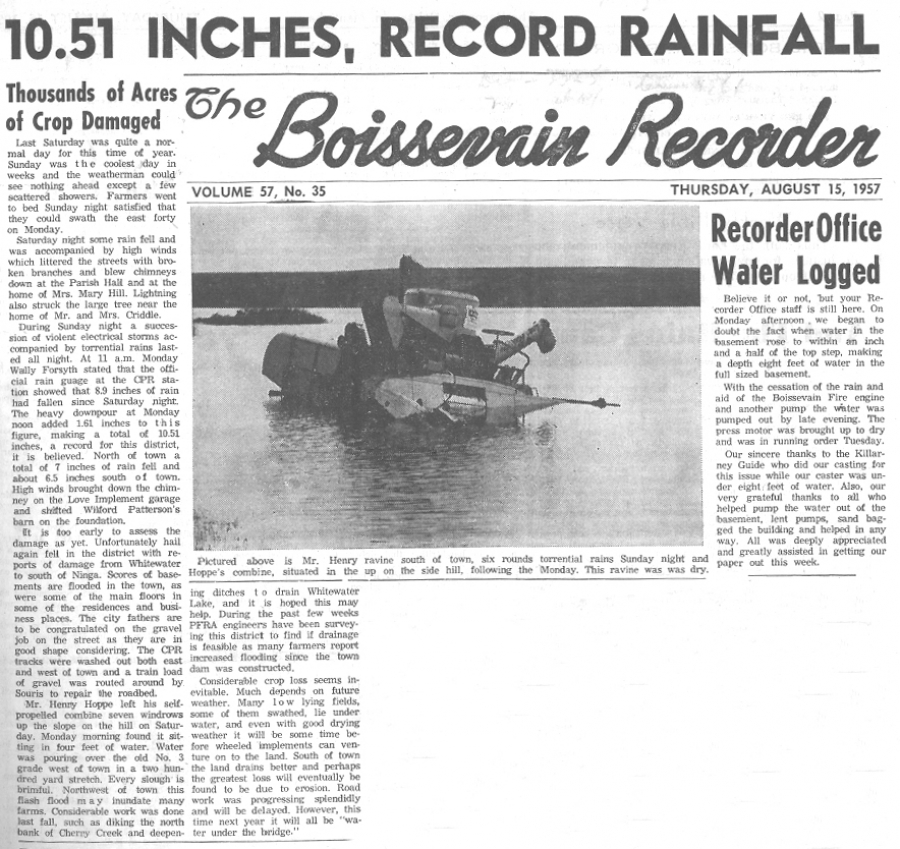
In August of 1957, the Boissevain area was absolutely drenched, in a way it had never been before and never was again. Over August 9-11, 1957, a whopping 10.51 inches of rain fell and certainly took its toll.
The story was told in the August 15 edition of the Recorder. According to the account, Saturday the 9th was a normal day for the most, with Sunday being the coolest day in weeks, and farmers preparing to do some swathing come Monday. There had been some rain Saturday night, with wind that left branches lying and knocked down chimneys at the Parish Hall and the home of Mary Hill.
But it was on the Sunday night the real damage was done. A succession of violent electrical storms came with torrential rains. By 11am, the CPR station rain gauge read 8.9 inches of rain had fallen since Saturday. On Monday by noon, another 1.61 inches came down, which brought the total to 10.51, a record for the district. At the time, they believed seven inches fell north of town, with 6.5 in the south. To complicate matters hail also fell with reports of damage from Ninga to Whitewater. Many basements in Boissevain were flooded and so were some of the main floors in residences and businesses. The CPR track was washed out both east and west of town, with the Recorder reporting there was a trainload of gravel being routed by Souris to repair the roadbed.
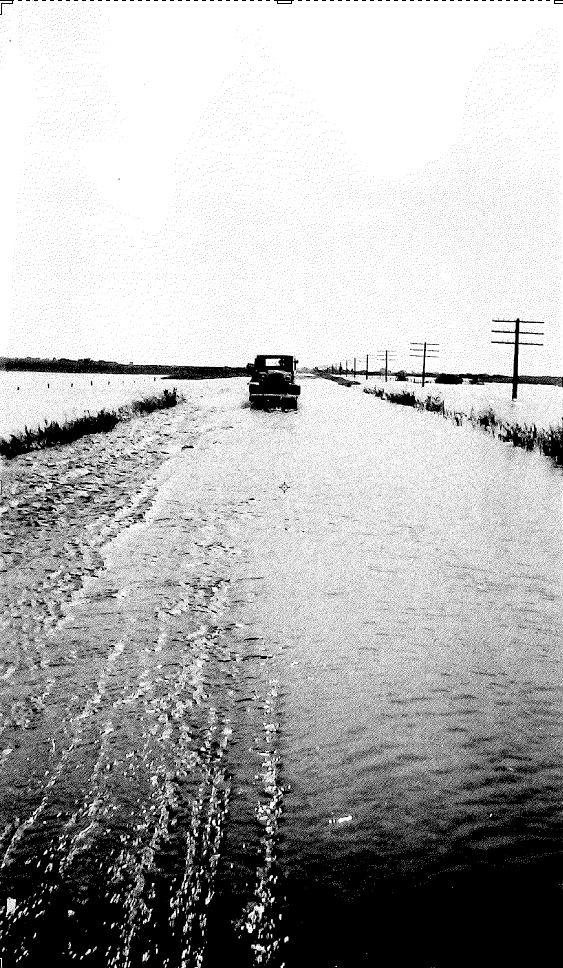
Other reports included Henry Hoppe leaving his combine seven windrows up the slope on a hill on Saturday, with it sitting in four feet of water by Monday morning. Water poured over old #3 for two hundred yards. Sloughs were full with threats of flash floods in the northwest. There were of course fears that there would be considerable crop loss, with some feeling better weather after might help the situation.
The paper itself had its own challenges to report. On the Monday afternoon, the water in the basement rose to within an inch and a half of the top step, making it as high as eight feet. With the help of the fire department and another pump, the water was out by late evening. The press motor was dried and running by Tuesday. In a look to the future, that week’s paper was printed with help from the Killarney Guide.
An interesting fact from that storm was Whitewater Lake. As one would expect, a rainfall of that magnitude would impact its levels. However, the attitude toward it was much different in 1957. As the Recorder reports, the previous fall had seen “deepening ditches to drain Whitewater Lake and it is hoped this may help.”
This is contrasted with the situation on the lake since 2011 and the floods afterward. There have been attempts over the last few years to get approval for a process of moving the water in a controlled fashion from the lake through a creek or creeks in the area to the Souris River during non-peak periods. So far, no luck.
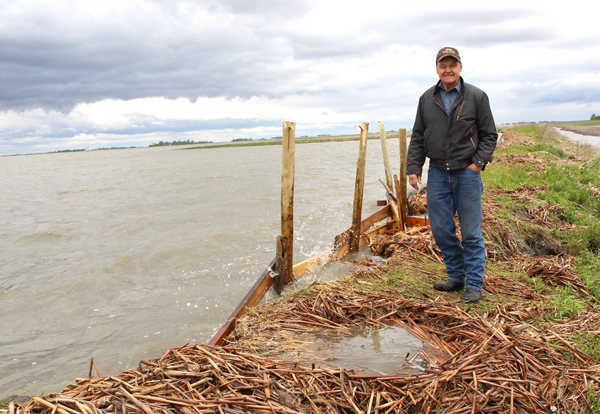
Pete Penner, who farms in the Whitewater Lake area, said despite the long time since the flooding, things are not going well.
“It’s bad,” Penner said. “It was higher than it is now, a lot higher. I don’t know what level it is now. No one takes the level anymore. But it is still terrible.”
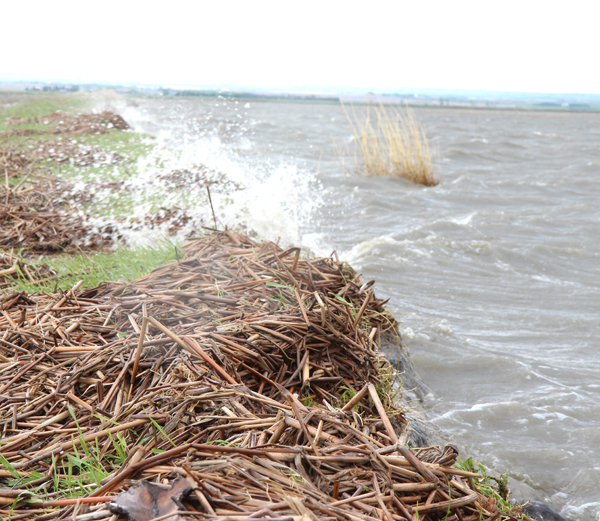
Penner said the high water levels were accompanied earlier this year by high winds. This brought waves that ran over their diking systems. He was able to pump it off his home section, but going over the dike wrecked roads in the area. High winds still continue to be a threat to farmers there.
But there is also land that is underwater, and has been for some time. Penner said he has two or three sections under and others around the lake would be similar.
He and all involved are beyond frustrated in their situation. Penner said he was there in 1976 when there was the big flood that expanded the lake in a drastic fashion. Nothing much has changed.
“It’s been a half-dozen times since. As soon as the water was gone, it was out of sight, out of mind. They studied it in 1976 and they have been studying it ever since. It is not different, it is exactly the same.”
“We don’t want to drain it,” he continued, “we just want to get it back to where it belongs.”
There is annoyance at the new government of Manitoba for its inaction. For years, locals wrestled with the NDP, a government the area was not represented in, to get some action. Now the Conservatives, the traditional party of the region, are in power. However, in a recent meeting in Boissevain, Premier Brian Pallister said there was no money for a solution. Penner is more than disappointed.
“Absolutely. Brian Pallister, we voted for you guys and you haven’t done anything. This is our livelihood and they do nothing. There are thousands of acres flooded. You try to do something and they obstruct it. It makes zero sense.”
The problem has been going on for seven years, and Penner said no one knows what the land will be like when the water does go. He said another few inches of rain there would be a disaster. Conversely, 10.51 inches might actually achieve something.
“Maybe we do need that. Someone might actually do something. This is no way to live.”
by PAUL RAYNER, Recorder staff
Photos by Anna Latimer, Recorder staff